The room, hour by hour
Atmosphere
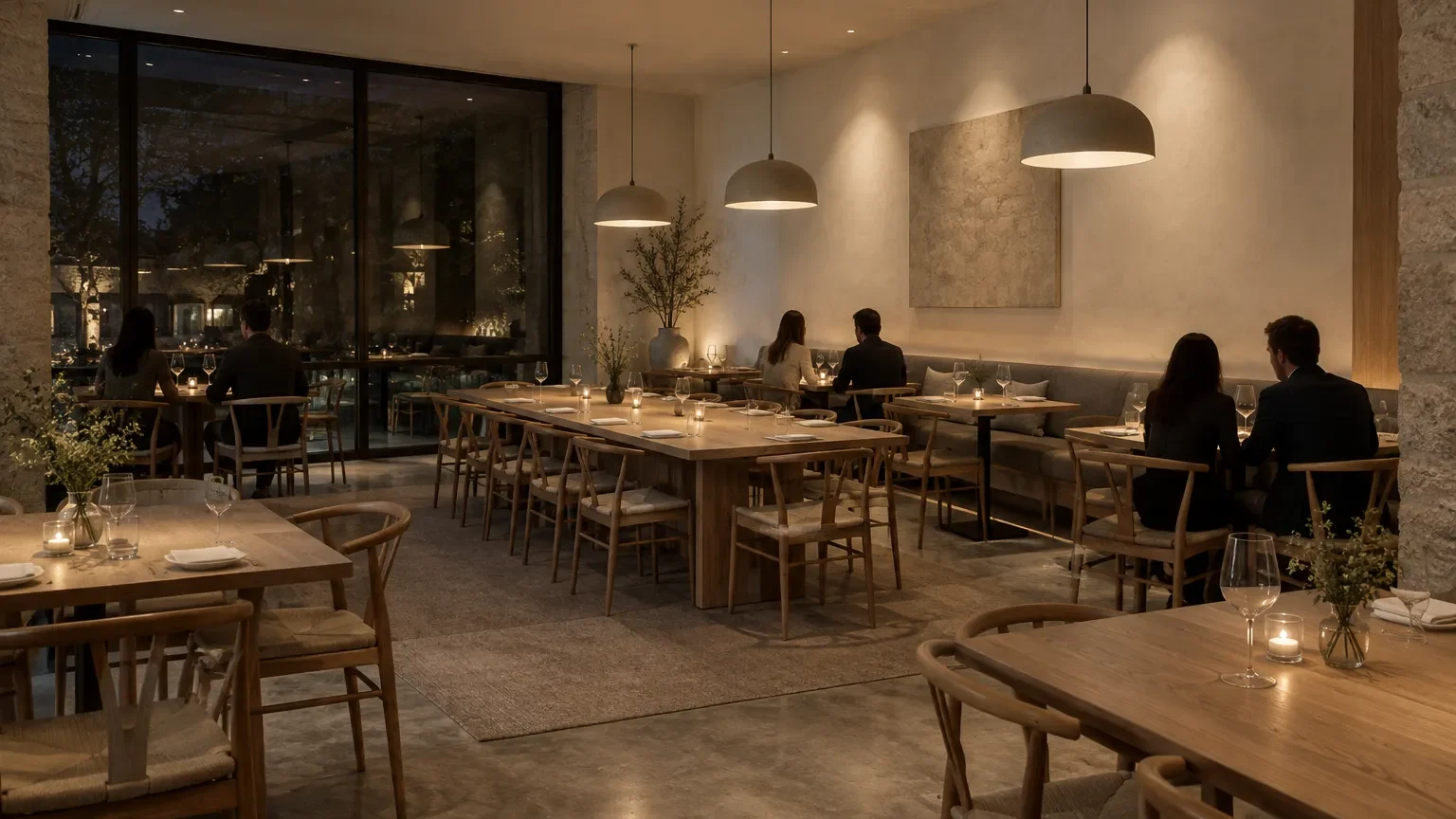
Twenty-four seats in Fitzroy, lit and paced so the dining room changes as the evening does.
LIGHT
The room at 5.30 pm is not the room at 9 pm. Daylight from the street side does the early work, and at the Friday and Saturday lunch service the tables are read in plain light — plate edges, the surface of a sauce, the colour of a leaf. Nothing is turned up to show the food off; the food is the reason the light is set at all.
Through the evening the lighting drops in stages rather than all at once, so the change is felt before it is noticed. Light gathers around each table instead of filling the ceiling: faces stay readable, cutlery catches, and the outer edges of the room fall away. By the main course the space has narrowed to 24 seats and the people sitting in them.
If a dish arrives and the light is wrong for it, the light is adjusted. That is the whole rule.
SOUND
SPACE
Twenty-four seats is a decision before it is a number. Tables sit far enough apart that a chair can be pulled out and pushed back without the next table noticing, and the floor team can pass between them carrying plates without asking anyone to move.
The walk from the door to a seat is short and unhurried — coats away, water poured, a short verbal guide to the menu before anything is ordered. No one is squeezed past a neighbouring table to reach their chair.
Comfort is also a matter of what is left out. The empty floor between tables is what keeps a conversation private at arm's length, and it is the reason a larger group can be seated without the room rearranging itself around them.
05
TABLE
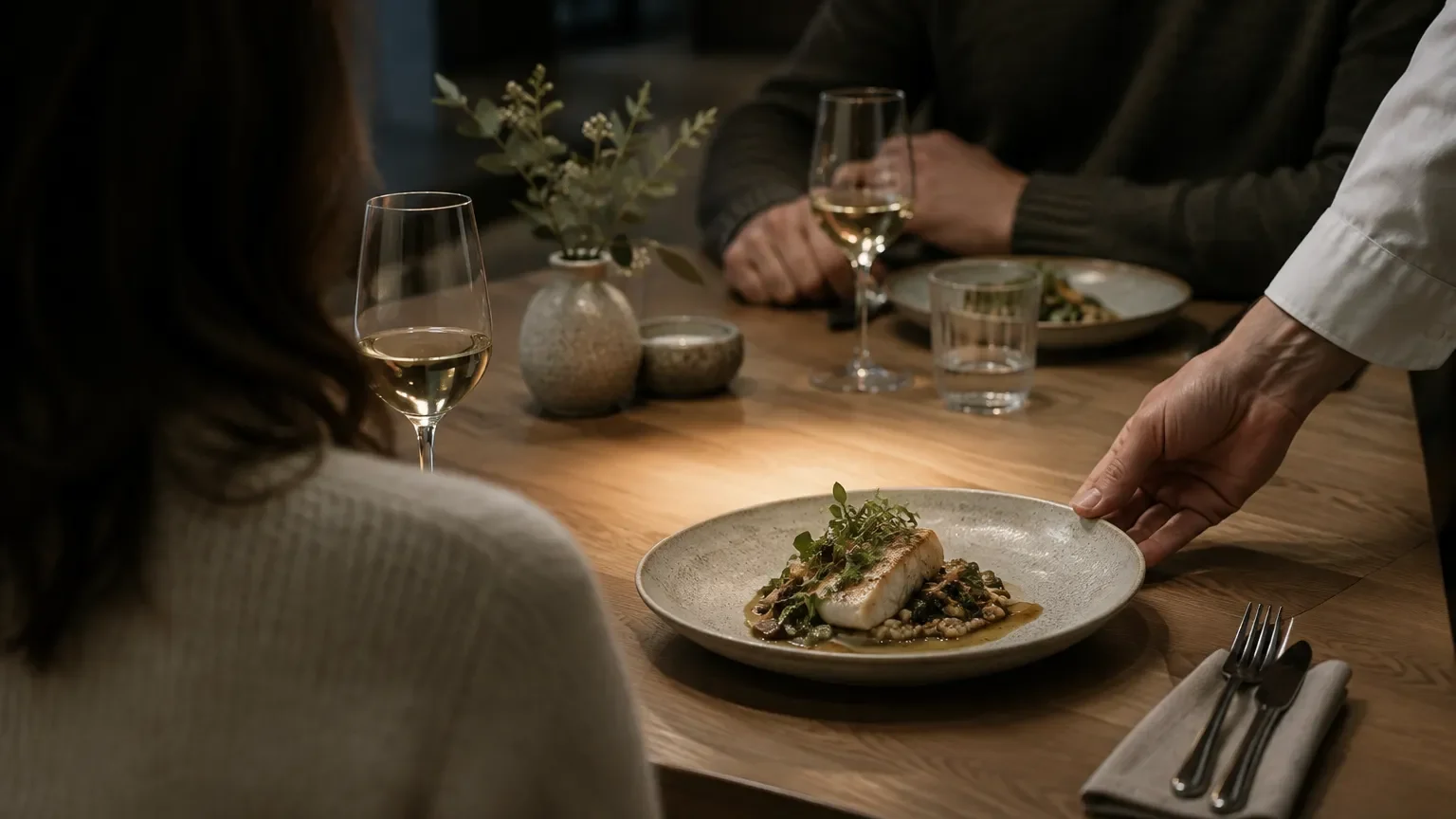
Where the plate, the person serving it and the conversation meet. Everything else in the room is set to keep that moment quiet.
EVENING
- Daylight fades
- Lights lower
- Room settles
- Pace slows
- Last course